
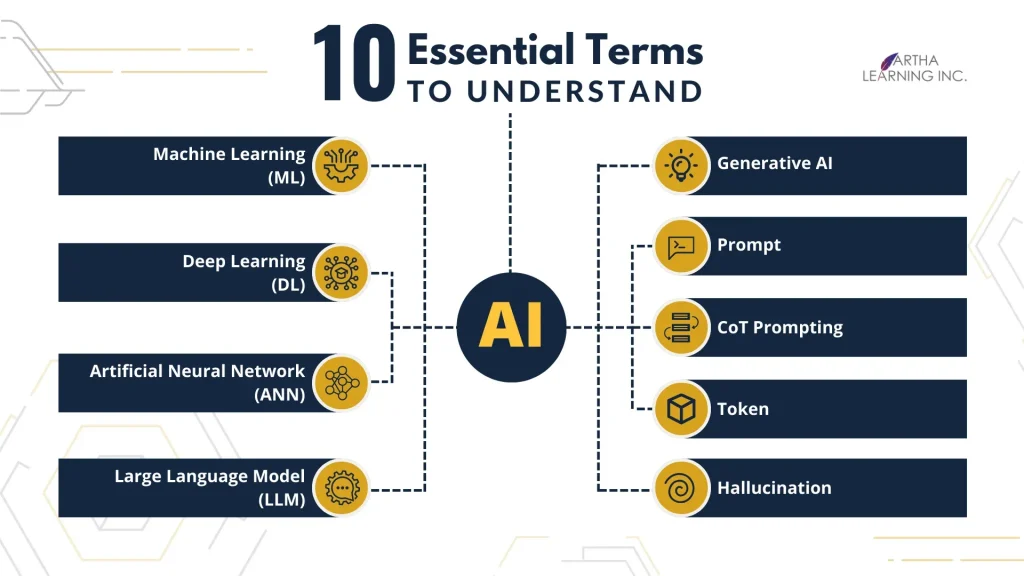
Understanding AI is a practical framework for exploring how machines imitate, augment, and sometimes surpass human capabilities in data-driven tasks that touch many areas of modern life. A solid grasp of artificial intelligence basics helps readers separate hype from real capabilities across industries, from healthcare to finance. It also clarifies what AI can do today and what remains challenging, including how AI works in real systems and the limits of current models. From AI in everyday life to enterprise-scale analytics, the field spans theory and practice, research labs and everyday deployments. This primer guides beginners and seasoned readers alike through the essentials, the core mechanisms that power it, and the real-world implications for individuals and organizations.
Beyond the basics, you can view AI through the lens of cognitive computing and data-driven intelligence, which complements a broader AI technology overview. A practical distinction often highlighted in discussions is machine learning vs AI, clarifying how learn-from-data approaches differ from rule-based or symbolic methods. These terms map to real-world outcomes, from automated processes to personalized experiences, helping readers connect theory to everyday tools. By recognizing related concepts such as neural networks, reinforcement learning, and predictive analytics, you gain a richer, web-friendly understanding of intelligent systems. This framing aligns research, product development, and policy discussions with how data, computation, and human insight come together in modern intelligence systems. These insights lay a foundation for evaluating AI claims, designing responsible systems, and communicating value to stakeholders. This approach also encourages a user-centered perspective, where outcomes and risks are considered in practical, measurable terms. As readers progress, they can tune expectations, compare solutions more effectively, and participate in responsible innovation that balances potential benefits with ethical considerations.
Understanding AI: Foundations, Capabilities, and Real-World Impacts
Understanding AI is a practical framework for seeing how machines imitate and augment human intelligence in data-driven tasks. By examining artificial intelligence basics, you learn that AI isn’t a single magic solution but a collection of techniques designed to recognize patterns, interpret language, reason about data, and adapt to new information. This foundation helps readers set realistic expectations about current capabilities, typical limits, and the kinds of problems AI is best suited to address in business, education, and daily life.
Beyond the hype, Understanding AI invites you to map where AI can help—such as automating repetitive tasks, personalizing experiences, or detecting anomalies—while acknowledging what it cannot yet do with human-level versatility. The journey also touches on how AI fits into the broader technology landscape, from data collection and preprocessing to model evaluation and deployment, and why ethical considerations matter in practice.
AI Technology Overview: How AI Works, Machine Learning vs AI, and Everyday Applications
AI Technology Overview offers a concise view of the major models and design choices behind modern systems. In this section you’ll encounter supervised learning, unsupervised learning, reinforcement learning, neural networks, and transformers. Each technique serves different problems: supervised learning excels at classification and regression with labeled data, unsupervised learning uncovers structure in unlabeled data, and reinforcement learning optimizes action sequences in dynamic environments.
Understanding how AI works and where machine learning fits into the bigger picture helps distinguish machine learning vs AI. In real-world systems, designers combine learning-based components with rule-based reasoning, perception, and planning to build robust applications. As AI continues to evolve, these hybrids enable practical outcomes—from AI in everyday life such as smarter recommendations and assistants to enterprise-scale automation—while keeping in view data needs, interpretability, and governance.
Frequently Asked Questions
What is Understanding AI, and how does it relate to artificial intelligence basics and how AI works?
Understanding AI is a practical framework for exploring what AI can do today, what it cannot do yet, and how it fits into the broader technology landscape. It connects artificial intelligence basics—the core ideas of intelligent systems—with how AI works—the data-driven cycle from data to action. This perspective helps beginners and seasoned readers evaluate AI solutions and their real-world impact.
How does machine learning vs AI differ, and what does an AI technology overview reveal about AI in everyday life?
Machine learning is a subset of AI focused on learning from data, while AI covers broader capabilities like perception and reasoning. An AI technology overview maps the major techniques—supervised, unsupervised, reinforcement learning, neural networks, and transformers—and clarifies where ML fits in. In everyday life, these technologies power recommendations, voice assistants, smart devices, and fraud detection, making AI tangible and useful.
| Topic | Key Points | Examples / Notes |
|---|---|---|
| Introduction to Understanding AI | AI is a practical framework for understanding how machines imitate, augment, and sometimes surpass human capabilities in data-driven tasks; explains what AI can do now, what it cannot do yet, and its place in technology. | Smart assistants, personalized recommendations, fraud detection, autonomous systems; starts with questions about machine intelligence, data needs, and how data becomes insights. |
| artificial intelligence basics | AI basics: systems that perform tasks requiring human-like intelligence (pattern recognition, language understanding, decision making, adaptation). Techniques include symbolic reasoning, rule-based systems, and statistical approaches. Everyday AI relies on statistical prediction, pattern recognition, and probabilistic reasoning. | Examples: recognizing patterns, language tasks, basic decision making; broader techniques: rule-based and statistical methods. |
| how AI works | Data-to-action cycle: data collection → preprocessing → feature extraction → model selection → training → evaluation → deployment. Models learn by adjusting parameters to minimize error; evaluation tests generalization. Modern AI uses machine learning, deep learning, and large-scale data and computation. | Example flow: collect data, train model, deploy into production. |
| machine learning vs AI | ML is a subset of AI focused on learning from data; AI includes rule-based components, planning, and perception. Many systems are hybrids that combine ML with symbolic reasoning. | Hybrid systems: ML for interpreting inputs plus symbolic reasoning for planning. |
| AI technology overview | Overview of major techniques: supervised learning, unsupervised learning, reinforcement learning; neural networks and transformers. Each technique suits different problems. | Supervised for classification/regression; unsupervised for structure in unlabeled data; RL for sequential decisions; neural networks/transformers for complex patterns. |
| AI in everyday life | AI shapes daily interactions, from recommendations to voice translation and automation. It also enables personalization in e-commerce, smart homes, healthcare imaging, and fraud monitoring. | Examples: streaming recommendations, voice assistants, translation, personalized shopping, smart devices. |
| Challenges and ethics in AI | Ethical considerations and governance are essential for beneficial AI, including bias, explainability, privacy, and accountability. | Organizations adopt responsible AI practices with transparent data handling, robust testing, and stakeholder engagement. |
| Building a practical understanding of AI | A practical approach starts with hands-on projects, small datasets, trying various algorithms, and using clear metrics to compare performance. | Iterative experimentation helps reveal which problems suit ML, traditional methods, or require human oversight; trade-offs include accuracy, speed, interpretability, cost. |
| Applications across industries | AI supports decision making, automation, and insight generation across sectors like manufacturing, agriculture, and education. | Examples: optimizing supply chains, precision farming, adaptive learning. |
| Future directions and ongoing research | Advances in model architectures, data efficiency, safety; efforts to reduce data/compute needs, improve robustness, and enable explainability. Cross-disciplinary collaboration and regulatory considerations are increasingly important. | Focus areas: data efficiency, robustness, explainability, governance. |
Summary
Conclusion: